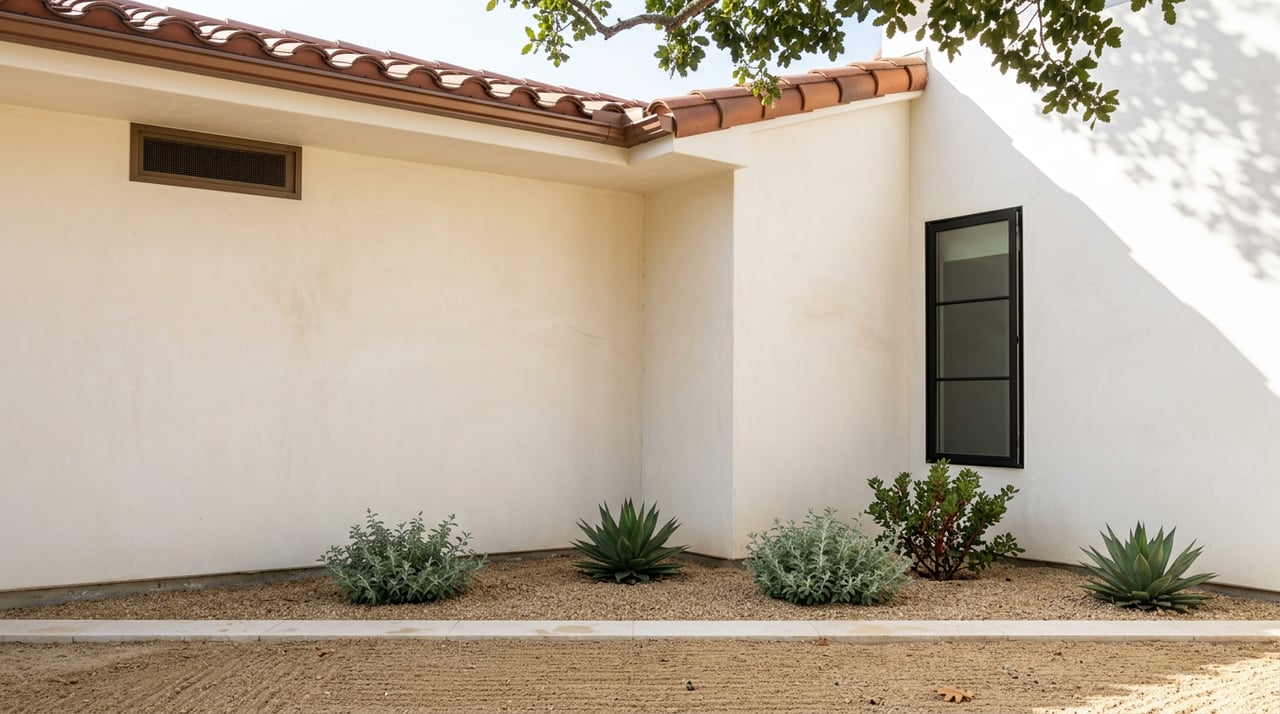
The kitchen remodel is not what decides your sale price in Calabasas anymore. The insurance quote is. A buyer can love the house, agree to your number, and still walk away in week two if their broker cannot place coverage at the address on terms their lender will accept. That single friction point, more than any staging choice, is what separates the Calabasas sellers holding price in 2026 from the ones granting concessions to keep escrow alive.
Three changes converged to make it so, and if you are preparing to list, you need to understand all three before you sign a listing agreement.
The map changed under your feet on March 24, 2025
For nearly two decades the Fire Hazard Severity Zone map that governed Calabasas disclosures dated to 2007. That is no longer true. CAL FIRE released its updated Local Responsibility Area maps in four phases in early 2025, with Phase 4 covering Southern California published on March 24, 2025. The City of Calabasas confirms the new map on its public safety page. The result for sellers here is simple and unambiguous: every parcel inside city limits now sits in a Very High Fire Hazard Severity Zone.
That designation is not a rating of your specific house. It is a hazard classification of the land under it, and it triggers a specific set of legal obligations at the point of sale. Any listing agent telling you the map does not really change anything is speaking about 2019 escrows, not 2026 ones.
What AB 38 actually asks you to disclose
Assembly Bill 38 has been on the books since 2019, but the July 1, 2025 phase-in is what is showing up in Calabasas transaction files right now. Two disclosure obligations apply the moment you list a home in a High or Very High FHSZ:
- The Fire Hardening and Defensible Space (FHDS) advisory and disclosure, which asks the seller to identify features the seller actually knows about, including untreated wood shingles or shakes, gutters without covers, combustible landscaping within five feet of the structure, and single-pane glass windows.
- For homes constructed before January 1, 2010, the State Fire Marshal's list of low-cost retrofits, which the seller must supply along with a checklist indicating which of those measures are currently present, even if none of them are.
AB 38 does not require you to retrofit anything. It requires you to tell the truth about what is and is not there. The distinction sounds academic until you sit across from a buyer's agent with the FHDS in hand. A form that shows five unchecked boxes is a form that invites a repair request, a price reduction, or a cancellation. A form paired with dated invoices for ember-resistant vents, Class A roofing, and a Zone 0 clearance walk is a form that closes escrow at list price.
There is also the defensible-space piece. Public Resources Code Section 4291 has long required clearance around structures in a Very High zone, and the practical expectation now is that sellers provide documentation of compliance before close, with the buyer given the option in writing to complete the work within six months after close if documentation is not available at signing.
The insurance contingency is the new inspection contingency
Here is the friction that catches even experienced Calabasas sellers off guard. After the January 2025 Los Angeles wildfires, buyer behavior in the western San Fernando Valley changed. Buyers and their agents now treat the insurance quote as a hard contingency, not a formality after inspections. A luxury buyer's advisory published for the 2026 Calabasas market puts it directly: confirm insurability before removing the inspection contingency.
Why the shift? The admitted market pulled back. State Farm stopped accepting new California property applications effective May 27, 2023, and non-renewed tens of thousands of policies in 2024. Tokio Marine and Trans Pacific exited the state. By 2026 the California FAIR Plan had grown past 450,000 policies, more than double its 2021 enrollment, and the January 2025 wildfires produced insured losses estimated between $25 and $45 billion. Commissioner Ricardo Lara and Assemblymember Lisa Calderon introduced AB 1680, the Make It FAIR Act, in early 2026 to overhaul the FAIR Plan's claims handling and coverage options.
For your escrow, that landscape reduces to a workflow question:
| Contingency stage | Pre-2025 Calabasas norm | 2026 Calabasas reality |
|---|---|---|
| Inspection period | General condition, roof, HVAC, pool | Same, plus buyer requests FHDS review and defensible-space evidence |
| Insurance quote | Buyer confirms after removing contingencies | Buyer requires bindable quote before removing inspection contingency |
| Placement path | Admitted carrier, straightforward | Often FAIR Plan plus a Difference in Conditions wrap, since the FAIR Plan is a named-peril fire policy that does not include liability, theft, or water |
| Timeline pressure | Escrow drives the calendar | Carrier underwriting drives the calendar |
The seller who understands this sequence has leverage. The seller who does not learns about it when a buyer's agent asks for a fifteen-day contingency extension on day fourteen.
A pre-listing sequence that protects your price
The right time to address disclosures and insurability is before your first showing, not during the buyer's due diligence. A workable order of operations for a Calabasas listing in the current market:
- Pull your parcel on the CAL FIRE Local Responsibility Area viewer and print the result. Every Calabasas parcel returns Very High, but the printout dates your record.
- Complete the FHDS disclosure honestly, then walk the property with a wildfire mitigation contractor. Every item you can convert from a vulnerability to a hardened feature before listing is an item removed from the buyer's negotiation list.
- Assemble a defensible-space file. Include vegetation management records, tree work invoices, and photos of Zone 0, Zone 1, and Zone 2 conditions.
- Ask your insurance broker to pre-shop the property. If admitted carriers decline, get a written FAIR Plan plus DIC quote in your file. Handing that packet to a buyer's agent on day one shortens the buyer's underwriting timeline and blunts the insurance contingency as a negotiating weapon.
- If your home was built before 2010, obtain the State Fire Marshal's low-cost retrofit checklist and mark it accurately. Consider completing the lower-cost items in advance.
None of these steps require a full home hardening rebuild. They require a paper trail that reframes the property in the buyer's file from an underwriting question to a solved one.
What this means for The Oaks, Mountain View Estates, and hillside custom homes
Calabasas is not a single market. Guard-gated communities like The Oaks of Calabasas and Mountain View Estates have HOA-maintained perimeters, coordinated brush clearance, and, in many cases, community-level fire mitigation records that individual sellers can request and present. That reduces the individual seller's disclosure burden but does not eliminate it, because AB 38 applies parcel by parcel.
Custom hillside homes off Mulholland Highway, in the Calabasas Highlands, and along Las Virgenes Road sit in a different negotiating posture. Slope, single-lane access, and vegetation density are exactly the factors carrier models penalize hardest. Sellers in these pockets should assume the buyer will land on the FAIR Plan plus DIC path and price the pre-listing broker walk-through into their preparation timeline, not their contingency period.
The market context makes this preparation worth the effort. Zillow's Home Value Index put the average Calabasas home value at roughly $1.73 million as of June 30, 2026, with homes going to pending in about 23 days. Redfin's May 2026 read showed a median sale price near $1.8 million with 41 days on market. Those numbers describe a market where well-prepared listings still move on schedule and unprepared listings absorb the friction as price.
Three questions Calabasas sellers ask most
If AB 38 does not require me to retrofit, why should I? Because the buyer's file, not the statute, is what closes your escrow. A disclosure that shows no hardening features gives the buyer's agent a clean lane to request credits. A disclosure paired with documented upgrades takes that lane away.
Can I sell as-is and let the buyer sort out insurance? You can, and some cash buyers will accept that risk. Financed buyers cannot. Their lender requires bindable coverage at close, and if the quote does not appear inside the contingency window, they cancel.
Does being in a Very High zone affect my sale price? Every Calabasas parcel is in the same zone, so the designation itself does not distinguish your home from the comps. What distinguishes it is the disclosure packet and the insurance path you hand the buyer with your listing.
Ready to price this correctly?
If you are considering a Calabasas sale in the next twelve months, the disclosure and insurance groundwork should start before the first professional photo is taken. Valerie Punwar Associates prepares every Calabasas listing with a documented FHDS advisory, a defensible-space file, and a pre-shopped insurance path so buyers arrive at your table with fewer reasons to negotiate. What's My Home Worth? Reach out for a private consultation and a valuation grounded in what your specific parcel, and its paperwork, will command in today's market.